
Six MLAs have made visits to local pharmacies this week to speak to staff about their role in supporting patients who require palliative care in the community.

Alliance Party Deputy Leader Eóin Tennyson, UUP MLA Doug Beattie, and DUP MLA Diane Dodds visited Daly’s Pharmacy in Banbridge, while Alliance Party MLA Connie Egan, UUP MLA Alan Chambers and DUP MLA Peter Martin met with staff at Sweeney’s Pharmacy in Holywood.

The visits mark Palliative Care Week, 7-13 September, which is an annual, all-island campaign aimed at raising public awareness and increasing understanding of palliative care and its benefits.
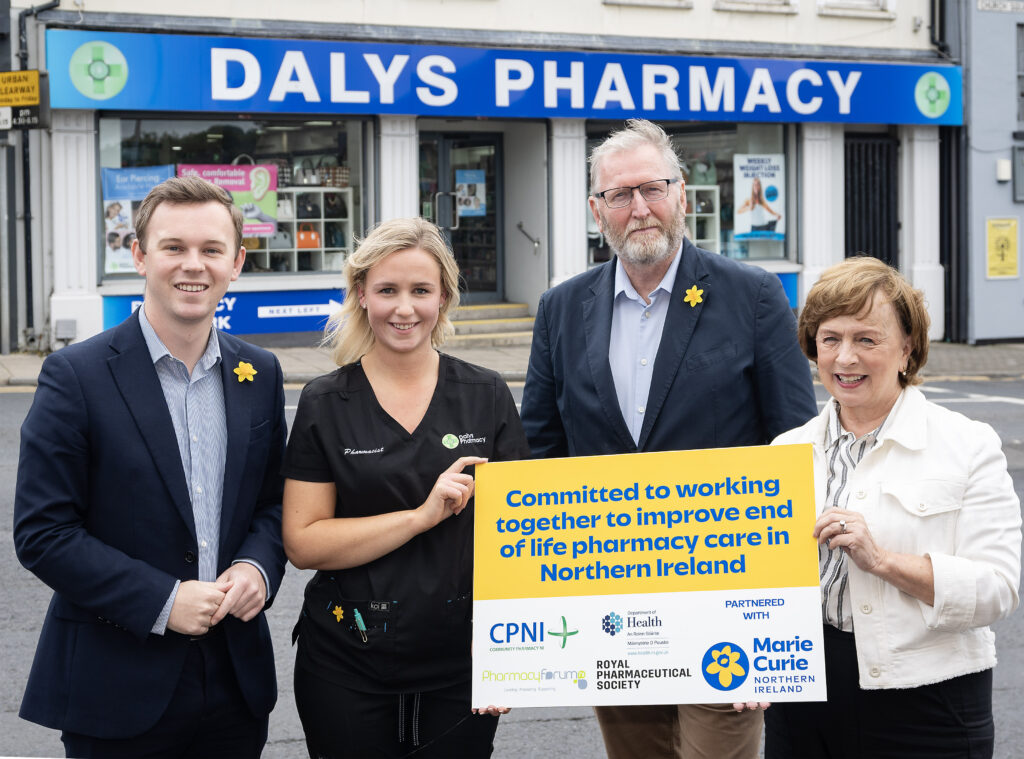
Community Pharmacist Ellen Gault from Daly’s Pharmacy in Banbridge is joined by Alliance Party Deputy Leader Eóin Tennyson, UUP MLA Doug Beattie, and DUP MLA Diane Dodds.

Data previously published by leading end of life charity, Marie Curie, found that the demand for palliative care in Northern Ireland is expected to grow by more than 32% by 2048 (from 15,500 people in 2023 to 20,500 in 2048) due to an aging population, an increase in chronic illnesses, and the increased presence of two or more long-term health conditions within the population.
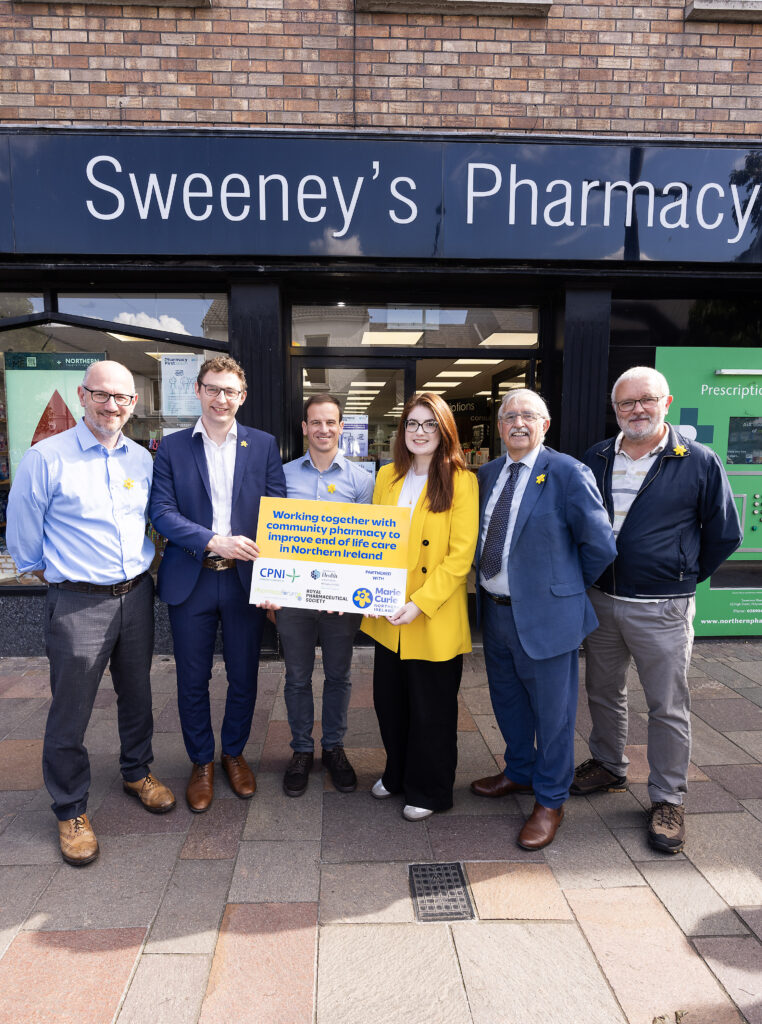
Alliance Party MLA Connie Egan, UUP MLA Alan Chambers and DUP MLA Peter Martin met Community Pharmacist David Marshall at Sweeney’s Pharmacy in Holywood alongside Marie Curie Specialist Palliative Care Pharmacist Chris Black.

Palliative care is currently provided by all community pharmacies with patients and carers encouraged to use their regular pharmacy to obtain medication in the first instance, however Daly’s and Sweeney’s are amongst the more than 75 pharmacies in Northern Ireland which are currently signed up to the ‘Daffodil Standards’ – a set of guidelines developed by The Royal Pharmaceutical Society in partnership with Marie Curie, which help pharmacists to maintain good practice in providing palliative and end of life care.

At their visits, MLAs heard first-hand how local pharmacists play a key role in supporting those living with a terminal illness, and their families and carers, by providing quality, personalised care both at the end of life and following a bereavement.

Eóin Tennyson MLA, said: “What stood out to me today in Daly’s was the commitment of the team here at the pharmacy in supporting those living with life-limiting conditions, as well as their families and carers, at some of the most difficult times in their lives. They provide a familiar face, advice, support, and continuity of care in the community which can’t be matched or replicated anywhere else in the health service.”

David Marshall, Community Pharmacist at Sweeney’s Pharmacy Holywood, said:

 “We link in closely with the Marie Curie Hospice in East Belfast, as well as with local district nursing teams, GPs, carers and families who come through the door for things such as prescriptions, medicines, advice and signposting. Since signing up to the Daffodil Standards and rolling out the education to our staff, we’ve noticed an improvement in their confidence in assisting people with palliative care needs. I would definitely encourage other pharmacies who are interested in registering, to do so.”

Launched in Northern Ireland in March of this year, the Daffodil Standards for pharmacies are supported by the Department of Health, Pharmacy Forum NI and Community Pharmacy NI.

To find out more about the Daffodil Standards and to register for a free welcome pack, search ‘Marie Curie Daffodil Standards’ or visit mariecurie.org.uk.
A new campaign has been launched in community pharmacies across Northern Ireland, encouraging everyone to get more physically active in their everyday lives.

‘Move More, Feel Better’ is running in over 500 community pharmacies as part of the Living Well service which highlights the role of pharmacy teams in providing advice and support to help people get more active and is delivered in partnership with the Public Health Agency (PHA), Community Pharmacy NI (CPNI), and the Department of Health (DoH).

The ‘Move More, Feel Better’ initiative aims to raise awareness of the many physical and mental health benefits of being more active – and how simple, small changes to daily routines can make a big difference. Whether it’s taking the stairs instead of the lift, walking or cycling instead of driving, or even getting off the bus a stop early – the message is clear, every movement counts.

David Tumilty, Health Improvement Manager at the PHA, said:

“Being active doesn’t mean spending hours in the gym – it’s about finding small opportunities to move more each day. Even a little bit of regular activity can boost your mood, reduce stress, improve sleep, and help manage or prevent conditions like heart disease, stroke, diabetes, and some cancers.

“Through this campaign, we want to remind people that physical activity is one of the most important things you can do for your health and wellbeing – and it’s never too late to start.”

Pharmacies taking part in the Living Well service will display campaign materials and offer leaflets with practical tips on how to become more active. Staff will also be on hand to offer further advice and support to help individuals make changes that suit their lifestyle.

Patrick Kennedy, Community Pharmacist from Kennedy’s Pharmacy in Rasharkin, said:

“As pharmacists, we’re in a great position to talk to people about their health, and we see first-hand how even small lifestyle changes can have a big impact. I regularly speak with people about managing long-term health conditions and physical activity is one of the most effective ways to prevent and support the treatment of many common issues.

“Small changes like walking more or reducing sedentary time can have a big impact on overall health. The first step is simple, just ask your pharmacist for advice – we’re here to help you get started.”

The ‘Move More, Feel Better’ campaign also highlights how physical activity can:

  • Improve mental health and quality of life
  • Boost energy levels and confidence
  • Ease joint and back pain
  • Help with weight management

Next time you visit your local community pharmacy, look out for the campaign displays and pick up a ‘Move More, Feel Better’ leaflet for tips on getting active in ways that work for you.

For more information on the campaign and how to get started, visit www.pha.site/livingwell.

Notes to editors

The campaign runs in participating pharmacies throughout August and September 2025.

Before all thoughts turn to summer holidays, the body representing community pharmacists, CPNI, has briefed politicians on the need for a whole service, whole community approach to tackling this winter’s health pressures.

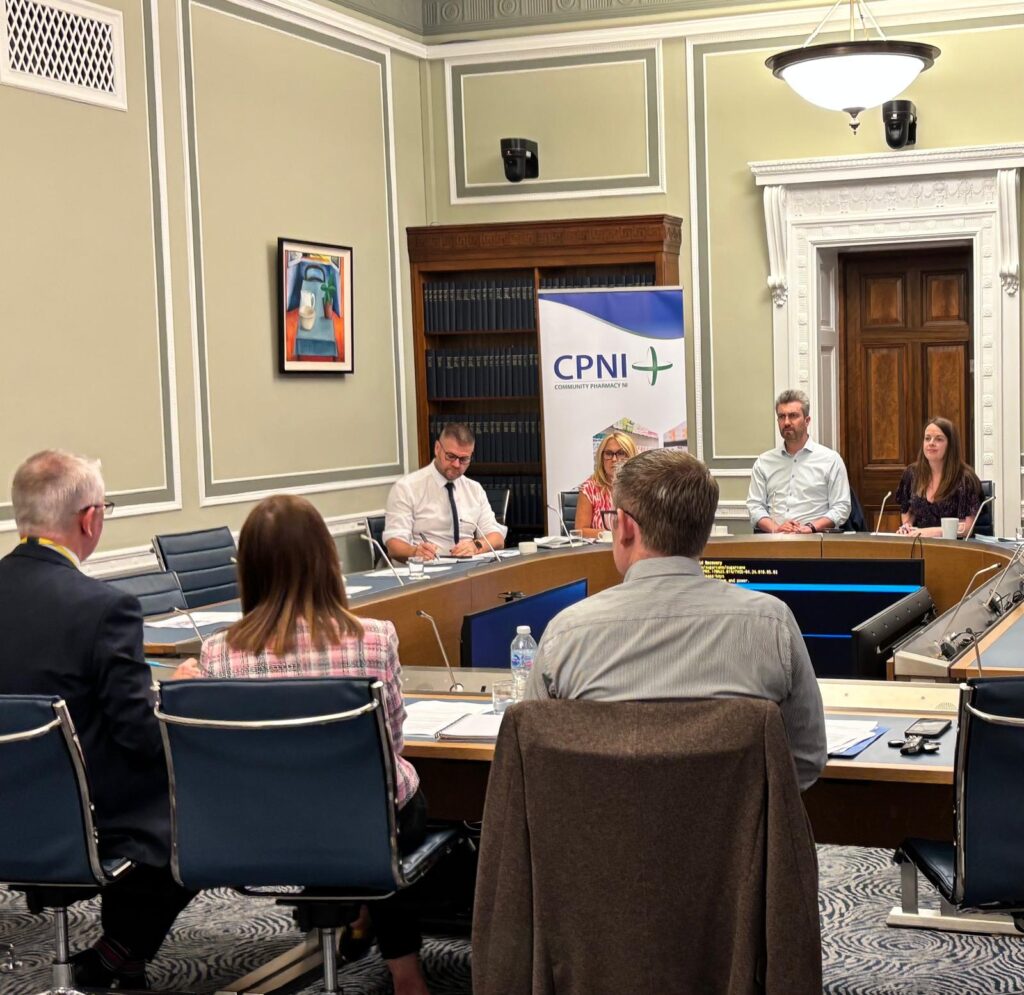
Presenting to a cross-party group of MLAs at Stormont this week, Gerard Greene, Chief Executive of Community Pharmacy Northern Ireland (CPNI) discussed how creatively exploring funding opportunities within health service budgets to enable community-based health services could be key in averting the health service crisis seen in previous winters.

He said, “Last winter our hospital Emergency Departments witnessed some of the worst scenes ever experienced here.  Community Pharmacy has been closely involved in the Department of Health’s winter preparedness planning over recent months, and we would like to acknowledge the Minister Nesbitt and officials for driving this forward. 

“We are pleased that the value and contribution of Community Pharmacy is being recognised as a pivotal part of the Minister’s “shift left” approach.  Winter is a test for the whole health service and our integration in winter planning will ensure pharmacies are ready to step up.

“Through Pharmacy First, the Department of Health has invested in services aimed at keeping people well in their communities, close to home – and as a key way of alleviating the pressure from other stretched parts of the health service.  Community pharmacies provide highly skilled, highly trained healthcare professionals who can advise and treat many common ailments.  Pharmacy First services such as advice and treatment when needed for sore throat, shingles and urinary tract infections mean that GP appointments are freed up.

“One of last year’s biggest additional health service pressures came from the pre-Christmas winter flu outbreak which snowballed across the generations over the festive period.  There is a highly effective tool to tackle such outbreaks in the form of vaccination, and community pharmacies will be heavily involved in the Covid and winter flu vaccination service from the autumn. We will be actively encouraging eligible members of the public to seek out the vaccinations in their local pharmacy, when they are available, and our pharmacists will also deliver the important vaccination programme in nursing and residential homes.  This too is aimed at keeping older people well where they live and out of hospital.

Community pharmacies are based at the heart of towns and villages, they should be the first point of contact into the health service and by offering expert advice, treatment and services they can help us all to stay well, ease some of the winter pressures and relieve pressure on GPs and emergency hospital services.”

The Living Well ‘Stay well this winter’ campaign ran throughout December 2024 and January 2025 and aimed to help the public prepare for the winter months by encouraging them to take actions to protect their health.

The patient stories captured in the evaluation, including the one below, show the positive impact community pharmacy teams have on the health and well-being of the local community.

“There is a local hostel near our pharmacy. We spoke with several residents about hand hygiene and staying well over winter. We encouraged those eligible for flu vaccines to get protected — later, some residents told us they had received their vaccines after our chat.”

Read more of the patient stories here.

A new campaign in community pharmacies is encouraging people to be more aware of how much alcohol they drink and the impact it could be having on their health.

The Public Health Agency’s (PHA) ‘Know your units’ campaign will run in community pharmacies across Northern Ireland throughout June and July 2025 as part of the Living Well service. It aims to increase awareness of the drinking guidelines and the health risks associated with drinking alcohol in excess of these guidelines.

Stephanie Hanlon, Joint Regional Lead for Drugs and Alcohol at the PHA said: “The most recent statistics from 2023 show the total number of alcohol-specific deaths registered that year was 341. That’s 65.5% higher than the number registered a decade ago so it’s of great importance that everyone takes a look at how drinking may be impacting their lives.

“Drinking too much can seriously affect your health. The risk of developing a range of health problems increases with the more you drink on a regular basis.

Some alcohol-related harms impact overwhelmingly on women. For example, we know that drinking alcohol increases the risk of breast cancer in women. This is why it’s so important to be aware of how much alcohol you are drinking, it’s impact on your body, your mental wellbeing, and the steps you can take to reduce the amount you drink.

“Speak to your pharmacist or GP if you are concerned about your own or someone else’s drinking.”

The UK Chief Medical Officers (CMOs) have developed guidelines to help people understand the risks alcohol may pose to their health and make decisions about their consumption in light of those risks. The ‘Know your units’ campaign supports awareness raising and education on these guidelines.

To keep health risks from alcohol to a lower level, it is safest not to drink more than 14 units a week, as recommended by the UK CMOs.

George Wright, Community Pharmacist from Clear Pharmacy, Bangor said: “Understanding your weekly alcohol units is key to keeping track of how much you’re drinking, so it is essential to get to know how many units are in your favourite drinks and take charge of your health. If you regularly drink the maximum of 14 units per week, it is best to spread your drinking over three or more days. If you want to cut down the amount you drink, a good way to help achieve this is to have several drink-free days each week.

“Community pharmacy is the ideal setting to help encourage people to look after their health. Pharmacy teams play a critical role in supporting, educating and raising awareness of the risks associated with drinking too much alcohol. Call in to your local pharmacy to find out how we can help.”

As part of the Living Well campaign, community pharmacies across Northern Ireland are offering a free information leaflet, ‘Focus On Alcohol’ and unit calculator wheel, to members of the public. A copy of the ‘Focus On Alcohol’ resource can be found at www.pha.site/FocusOnAlcohol


For more information and local services that offer help and support, visit www.drugsandalcoholni.info

Health Minister Mike Nesbitt has announced £4m for community pharmacy to provide support towards the recent increases in National Insurance. 

The full announcement can be read HERE.

Gerard Greene, Chief Executive of Community Pharmacy Northern Ireland (CPNI) has welcomed the news that the Health Minister has made funding available to help support community pharmacies in meeting the additional cost of new National Insurance Contributions which came into effect from April 2025.

He said,

“We welcome the news that £4million has been earmarked for community pharmacies facing the impact of increased staff costs resulting from the new employer National Insurance Contributions introduced in April 2025. 

“We have worked closely with the Minister to ensure that the financial impact of these increased staff costs is understood.  We have estimated that the total cost of national minimum wage rises, coupled with the NIC cost increases on the sector will be c£12million in this financial year.  These costs fall directly to pharmacy owners to cover, while trying to balance the books in the face of other mounting financial pressures.

“Further stabilising investment is needed for Community Pharmacy so that the sector can continue to work with the Department of Health to maximise the impact of community based pharmacy services which treat and care for people close to home, take pressure off GPs and hospitals and support the Minister’s vision for transformation of healthcare in Northern Ireland.”