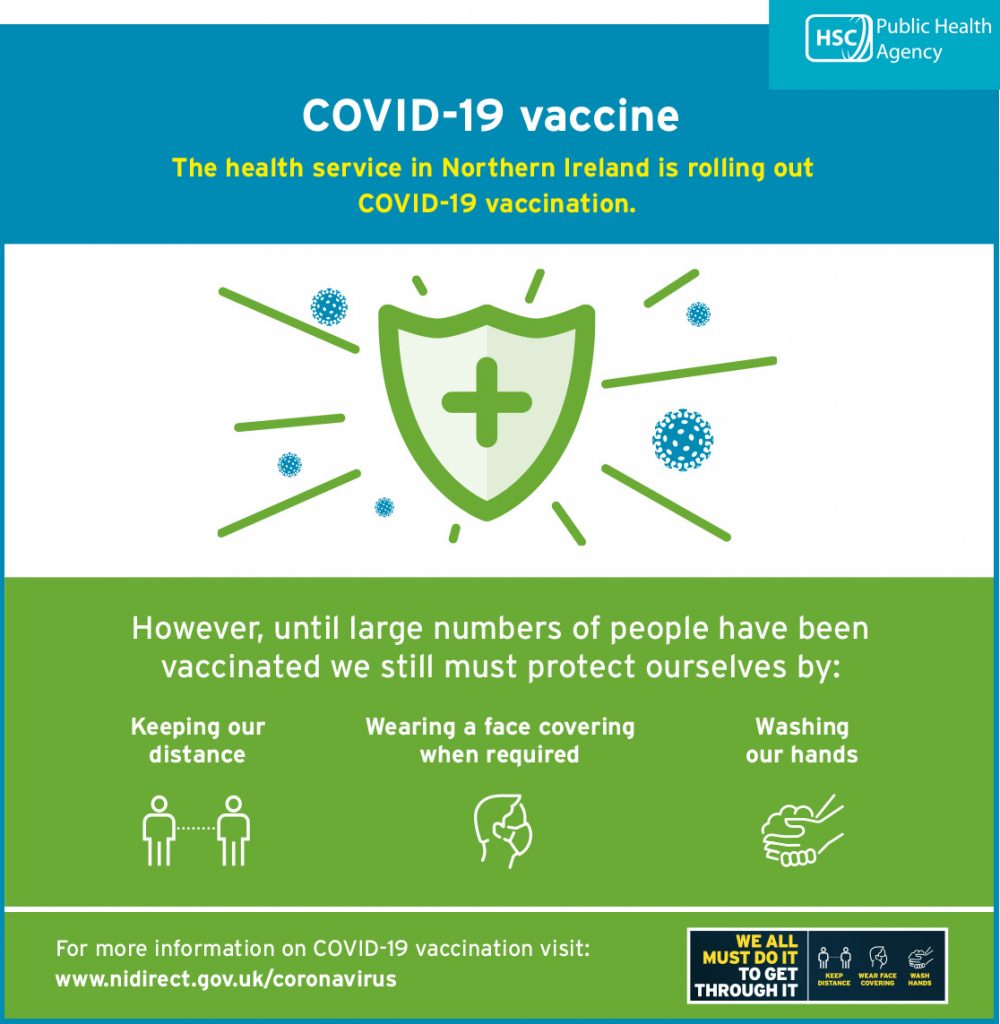
Since the start of the COVID-19 pandemic, teams of scientists across the world have been working to develop potential vaccines against the virus. The Pfizer/BioNTech vaccine has now been authorised for use in the UK by the MHRA, while more are expected to follow. Several other potential vaccines for COVID-19 are in the late stages of phase III trials.

Plans for the vaccination programme are moving at pace and the situation is changing on a frequent basis.

The CPNI Covid-19 hub has a dedicated COVID-19 Vaccine section relating to the which includes the following:

Health Minister Robin Swann has confirmed that care home residents will be prioritised in the first phase of the Covid-19 vaccination programme. The Pfizer/BioNTech vaccine was approved for use in the UK on December 2, with the first consignment arriving in Northern Ireland two days later. The vaccination programme will begin tomorrow morning, with vaccinators receiving the first injections.

The Minister said: “This will be a hugely important day and we can to look forward into next year with a degree of optimism. However, it needs to be stressed again and again that vaccination of the population is a massive undertaking that will take many months to complete.

“When it comes to clinical prioritisation, we will be closely guided by the Joint Committee on Vaccination and Immunisation (JCVI). It has identified care home residents as a top priority group. “It is well documented that the logistical requirements for the Pfizer/BioNTech vaccine pose particular challenges for care home deployment.

“We have been working very hard on these issues, in consultation with the Medicines and Healthcare products Regulatory Agency (MHRA). I am pleased to be able to confirm that we are satisfied that deployment to care homes can now proceed in the coming days. “The solution involves mobile teams operating from the different Trust vaccination centres located across the province.

“I know confirmation of these plans will be very welcome news for care home residents, their families and staff. We are currently considering how these arrangements might be extended to include over 80s in the community.”

Further details on vaccination prioritisation for health and social care staff will be confirmed tomorrow.

The Health Minister once again warned that the battle against Covid-19 is far from over.

“This is a time for patience and maximum vigilance. Progress on the vaccination programme will depend on available supply across the UK. The timescale for the approval of other vaccines will be an important factor.

“As clinical prioritisation rolls out, we will all have to await our turn and keep each other safe from the virus.  Now is not the time to drop our guard, we still have many challenging months ahead.”

  • UK medicines regulator authorises first Covid-19 vaccine
  • Pfizer/BioNTech vaccine meets regulator’s strict standards of safety, efficacy and quality
  • Vaccine to be made available across the UK to priority groups from next week

Tens of thousands of people will receive an effective and high-quality Covid-19 vaccine from next week, as the UK becomes the first country in the western world to authorise a vaccine.

Following rigorous clinical trials involving thousands of people and extensive analysis of the vaccine’s safety, quality and effectiveness by experts from the Medicines and Healthcare products Regulatory Agency (MHRA), Pfizer/BioNTech’s vaccine has been authorised for use in the UK. 

Now authorisation has been granted, Pfizer will deliver the vaccine to the UK. In making the recommendation to authorise supply, the MHRA will decide what additional quality assurance checks may be required before a vaccine can be made available. Pfizer will then deliver the vaccines to the UK as soon as possible.

The NHS has decades of experience in rolling out successful widespread vaccination programmes and has put in place extensive deployment plans.

In line with the recommendations of the independent Joint Committee for Vaccination and Immunisation (JCVI), the vaccine will be rolled out to the priority groups including care home residents and staff, people over 80 and health and care workers, then to the rest of the population in order of age and risk, including those who are clinically extremely vulnerable.

The vaccine is given in two doses – three weeks apart – and data from clinical trials showed the vaccine is 94 percent effective in protecting people over the age of 65 from coronavirus, with trials suggesting it works equally well in people of all ages, races and ethnicities. There were also no serious safety concerns reported in the trials.

The UK was the first country to pre-order supplies of the vaccine from Pfizer/BioNTech, with 800,000 doses being made available next week and 40 million doses ordered overall – enough to vaccinate up to a third of the population, and the majority of doses anticipated in the first half of next year.

Health and Social Care Secretary Matt Hancock said:

“This is a momentous occasion and provides fresh hope that we can beat this pandemic, with the UK at the forefront of this revolutionary breakthrough.

I can’t thank enough every single person who has contributed to this triumph – from the thousands of volunteers who took part in clinical trials, to the teams of expert scientists and clinicians at the MHRA who carefully analysed reams of data.

“This vaccine, when combined with effective treatments, will form a vital part in making Covid-19 a manageable disease, hopefully allowing us to return to normality in the future.

“This work will take time so for now we must all play our part and abide by the local restrictions to suppress the virus and protect the NHS as they start this vital work.”

Business Secretary Alok Sharma said:

“Since the start of the pandemic, every single person has made an immense sacrifice to protect themselves, their loved ones and the health of our nation. Through it all, we have remained united to defeat a virus that has taken too many before their time.

“As a nation we owe every scientist, clinician and trial volunteer an enormous debt of gratitude for their victory won against odds that at times seemed impossible. It is thanks to their efforts, and of our Vaccine Taskforce, that the UK was the first country to sign a deal with Pfizer/BioNTech and will now be the first to deploy their vaccine.

While today’s breakthrough is a positive one, we will not end the pandemic overnight. But in years to come, we will look back and remember this moment as the day the United Kingdom led humanity’s charge against this terrible disease.”

The MHRA started the rolling review of Pfizer/BioNTech’s data in October and the Government asked the regulator to assess the vaccine for its suitability for authorisation under Regulation 174 of the Human Medicines Regulations, enabling the temporary supply of medicines to be authorised in response to a public health need, which the regulator has recommended.

NHS England will outline further details on deployment shortly, but the plans will include:

  • Hospital hubs for NHS and care staff and older patients to get vaccinated;
  • Local community services with local teams and GPs already signing up to take part in the programme;
  • Vaccination centres across the country, ensuring people can access a vaccine regardless of where they live.

The global deployment of the Pfizer/BioNTech vaccine will require a huge logistical exercise over land, air and sea. 

Pfizer has years of proven experience in cold supply chain management and delivering temperature-controlled vaccines to locations across the world. It has developed packaging and storage innovations for the vaccine, including specifically designed, temperature-controlled thermal shippers to maintain conditions of ultra-low temperatures.

Deputy Chief Medical Officer for England Professor Jonathan Van-Tam:

This is a remarkable day – congratulations to Pfizer/BioNTech and their researchers, and to all my colleagues in the Vaccine Taskforce for their tremendous work to get us to this point, and I want to thank the MHRA experts, including the experts at the Commission on Human Medicines, who have tirelessly and rigorously assessed the safety, effectiveness and quality of the vaccine.

This vaccine has now passed all of the extensive checks needed for authorisation to supply and will soon be ready to be delivered to the NHS.

To all those who are eligible – this is the start of vaccine supply for the UK. In time, you will be invited to book your appointments to get your vaccinations. I urge you to be ready, and to help make the process as smooth as possible. For now, stay patient, and keep yourselves safe by continuing to follow the rules and maintaining social distancing.”

As the JCVI have made clear, there will need to be flexibility in terms of operational challenges around delivery of the vaccine to those in care homes. In line with the advice, every effort will be made to supply vaccine and offer vaccinations to care home residents and we will deliver the vaccine according to clinical prioritisation and operational necessity.

The vaccine will be available for free across the UK and the Government is working with the devolved administrations to ensure it is deployed fairly across the UK under the Barnett formula.

Through the Vaccines Taskforce, the UK has secured early access to 357 million doses of seven of the most promising vaccine candidates so far. To date, the government has invested over £230 million into manufacturing a successful vaccine. In the Chancellor’s Spending Review, published on 25 November, it was announced that the Government has made more than £6 billion available to develop and procure successful vaccines.

Vaccine Deployment Minister Nadhim Zahawi said:

The NHS has decades of experience in delivering highly successful vaccination programmes and has put in an enormous amount of work to get ready to roll out a Covid-19 vaccine to those most in need as quickly as possible.

Once extensive quality checks have taken place, it can be transported to vaccination sites across the UK and carefully unpacked ready for vaccinations to begin this month, with large-scale vaccination happening in the new year.”

Chair of the government’s Vaccines Taskforce Kate Bingham said:

 “Today is a momentous occasion and the UK will go down in history as the country that led the world in one of the biggest scientific breakthroughs of our time.

 “I am incredibly proud of my team in the government’s Vaccines Taskforce who have worked tirelessly over the last six months to negotiate agreements with vaccine developers around the world and step up the UK’s vaccine manufacturing and logistics capabilities, so any potential candidate can be rolled out as soon as possible.

 “The work does not stop here. The Taskforce will continue to monitor vaccines being developed around the world so that we have a diverse mix available, as well as ensure the UK is able to respond quickly to any future health crises.”

The first pilot of New Models of Prescribing Programme has launched.

This project will focus on musculoskeletal, respiratory and lymphoedema prescribing in the outpatient and community setting within SEHSCT and SHSCT.

Prescribers participating in both these pilots will issue prescriptions directly to patients in situations where it is of benefit to the patient to:

  • Commence treatment quickly (within 72 hours of contact with the non-medical prescriber)
  • Titrate medication and have an early review for response and appropriateness.

An information video can be viewed here

The 18th November is European Antibiotic Awareness Day marking the start of World Antibiotic Awareness Week (18 – 24th November). Antibiotic resistance (AMR) is still one of the biggest threats facing us globally and locally which remains as important as ever during the ongoing COVID-19 pandemic. The misuse of antibiotics during COVID-19 pandemic could lead to accelerated emergence and spread of antimicrobial resistance.  

To help stop the spread of antibiotic resistance promote simple measures that can make a huge difference:

Promote good hand hygiene- it’s not just for COVID. Download at: http://antibioticguardian.com/Resources/hand-washing-technique/

Self-care information and fact sheets are available to download from theself-care forum on COVID 19, cough, common cold, sore throat and otitis media (middle ear infection) amongst others. See http://www.selfcareforum.org/fact-sheets/ for the full range of fact sheets.

Antibiotics should not be used to prevent or treat viral infections, unless bacterial infections are also present. Refer patients to Pharmacy First service if appropriate for winter illnesses.               

Download the free MICROGUIDE app via the App store or Google Play (select ‘Northern Ireland Primary Care’ when prompted for trust) or for Desktop PC at
NI formulary

If we act now, we can protect the use of antibiotics so that they will continue to work now and well into the future. To become an antibiotic guardian, go to https://antibioticguardian.com for more information.

Community pharmacies across Northern Ireland will provide a Pharmacy First service again this winter to encourage patients to contact their local chemist for treatment and advice on a range of common winter conditions.

The Pharmacy First service is a winter initiative by the health service which enables patients to have a consultation virtually or in a private area with their local community pharmacist. Pharmacists can offer advice and treatment for common conditions like sore throat and common colds, recommend treatment and refer patients to other healthcare professionals as appropriate. 

Pharmacy First CPNI

Patients can call into a community pharmacy for a consultation, but for infection control purposes, it is preferable if they ring the pharmacy first for advice.  They can then have a consultation with the pharmacist over the phone, a video call or go to the pharmacy in person. Remote consultations will also be available for those who are vulnerable, patients who are continuing to shield, and those isolating due to COVID-19, who are unable to get medical advice for winter and COVID care. Anyone experiencing any COVID symptoms such as high temperature, continuous cough or loss of taste or smell should NOT go into the pharmacy.

Last winter, over 8000 consultations per month were offered to patients.  92% of people who used the service previously said they felt more confident about managing their cold or sore throat after speaking to their community pharmacist.

Cathy Harrison, Chief Pharmaceutical Officer, Department of Health said,

“Community pharmacists are the first point of contact for many people in need of healthcare advice and support, with nearly 10% of the population visiting one of our community pharmacies every day. This year our health service has seen unprecedented and unrelenting pressures across the whole system, and our community pharmacy teams adapted remarkably well to fast-changing circumstances and adjusted their services so they could continue to support people at a challenging time.”

“Community pharmacy teams are now developing their role as an integral part of the Health Service, and are delivering a range of new services specifically designed to meet the needs of our population during the pandemic period. The  ‘Pharmacy First’ service will offer people the opportunity to readily access a consultation with a highly trained healthcare professional for advice and treatment for common winter conditions, and relive pressures on other acute care providers such as GPs and Emergency Departments.”

Joe Brogan, Head of Pharmacy, Health and Social Care Board said,

“The Covid-19 pandemic continues to put huge pressures on the health and social care system. Community pharmacists have played an important role throughout this pandemic and will continue to do so this winter as we experience a second surge. We encourage the public, when they have a minor ailment such as a sore throat or a cold and are considering going to their GP – to think Pharmacy First. Community pharmacists will use their skills and expertise to provide advice and treatment for a range of common conditions. This will help support GP practices, GP out-of-hours services and Emergency Departments over the coming months when winter ailments occur more frequently.” 

Chief Executive of Community Pharmacy NI, Gerard Greene continued:

“We are pleased to be launching this year’s Pharmacy First for Winter Ailments Service at community pharmacies across Northern Ireland. With the health service already under tremendous strain, and on course for further winter pressures, this service will allow community pharmacies to manage common ailments such as sore throats and the common cold whilst easing pressures on other parts of our health service.”

“As we enter cold and flu season, community pharmacists will ensure available and accessible care is provided for people in the local community, to help them manage minor conditions at home. We expect there to be an upsurge in cold and other winter ailments and that is why we have put in place the Pharmacy First Service: to continue to be the front door to the health service, providing expert assessments, advice and treatments.”

“We would like to remind patients who are experiencing any COVID symptoms such as high temperature, continuous cough or loss of taste or smell NOT to go into the pharmacy, please phone your pharmacy instead for advice.”

With so much continued uncertainty around how to manage COVID, the community pharmacy network is also playing an important role in assisting patients through this period in a safe and remote fashion. I would strongly encourage anyone unable to access face-to-face advice and assistance from their community pharmacy because they are shielding, isolating or vulnerable to get into contact with their local community pharmacy to schedule a telephone or video consultation.”

Michael Hill, Community Pharmacist from Hill’s Pharmacy in Tandragee said:

Community pharmacist
Michael Hill

“Throughout the pandemic we have seen the enormous pressure placed upon our health services. Not only are we now facing a second wave, but we are facing it during winter flu season and that requires a radical rethink of how we treat patients.”

“Community pharmacy teams are proud to be able to play our part in ensuring care continues to be provided in the local community as far as possible, to relieve pressures on other parts of the health service, particularly for  minor conditions.”

“Our community pharmacies will become important hubs for people in the community so they can access good advice and healthcare this winter. The remote access feature of the service we offer will also benefit greatly those who have to shield, those who are vulnerable and those who may be COVID symptomatic and unable to leave the house. We know many of our patients will find this service of huge benefit. We would encourage everyone to work with us and use the service if they need it.”

The Pharmacy First service will be available from participating community pharmacies from 2nd November 2020 until 31st March 2021.  All patients registered with a GP in Northern Ireland can use this service, with the exception of temporary residents and patients living in nursing or residential homes.