Pharmacy campaign urges people to ‘Be UV aware’
A new campaign focusing on encouraging sun safe behaviours and raising awareness of the health impacts of over-exposure to UV radiation has been launched in community pharmacies across Northern Ireland.
‘Care in the Sun’ is running throughout April and May as part of the Living Well service. Living Well is offered in 500 pharmacies across Northern Ireland and provides information and advice on public health issues. It is delivered in partnership by the Public Health Agency (PHA), Community Pharmacy NI (CPNI), and the Department of Health (DoH).
Frances Dowds, Health Improvement Manager at the PHA, said: “Sunlight helps provide our bodies with vitamin D, supports bone health, lowers blood pressure, helps prevent disease and can promote good mental health. However, over-exposure to UV radiation from either the sun and/or sunbeds can damage skin, and we know that the majority of skin cancers are caused by this.
“Skin cancer is the most common cancer in Northern Ireland and accounts for over 31% of all cancers diagnosed. Over 4,000 people develop skin cancer each year and almost 1 in 10 of these are malignant melanoma, the most serious form. Malignant melanoma rates have risen over the past 40 years from an average of around 100 cases per year in the mid-1980s, to over 400 in recent years.
“There is no safe limit for exposure to UV radiation from sunbeds. Research shows people who have used a sunbed at least once at any stage in their life have a 20% higher risk of developing melanoma skin cancer than people who have never used a sunbed.
“The majority of all skin cancers are preventable by undertaking simple sun protection measures.”
Top tips for protecting your skin from cancer
- Check when you are most at risk from UV radiation. Levels of UV radiation are highest in Northern Ireland between March and October – even when it is cool or overcast.
- If you are going outdoors, check what the UV index will be throughout the day. You can check daily and hourly UV index forecasts via most weather apps on your mobile phone.
- Help protect your skin when the UV index is 3 or more by following this guidance:
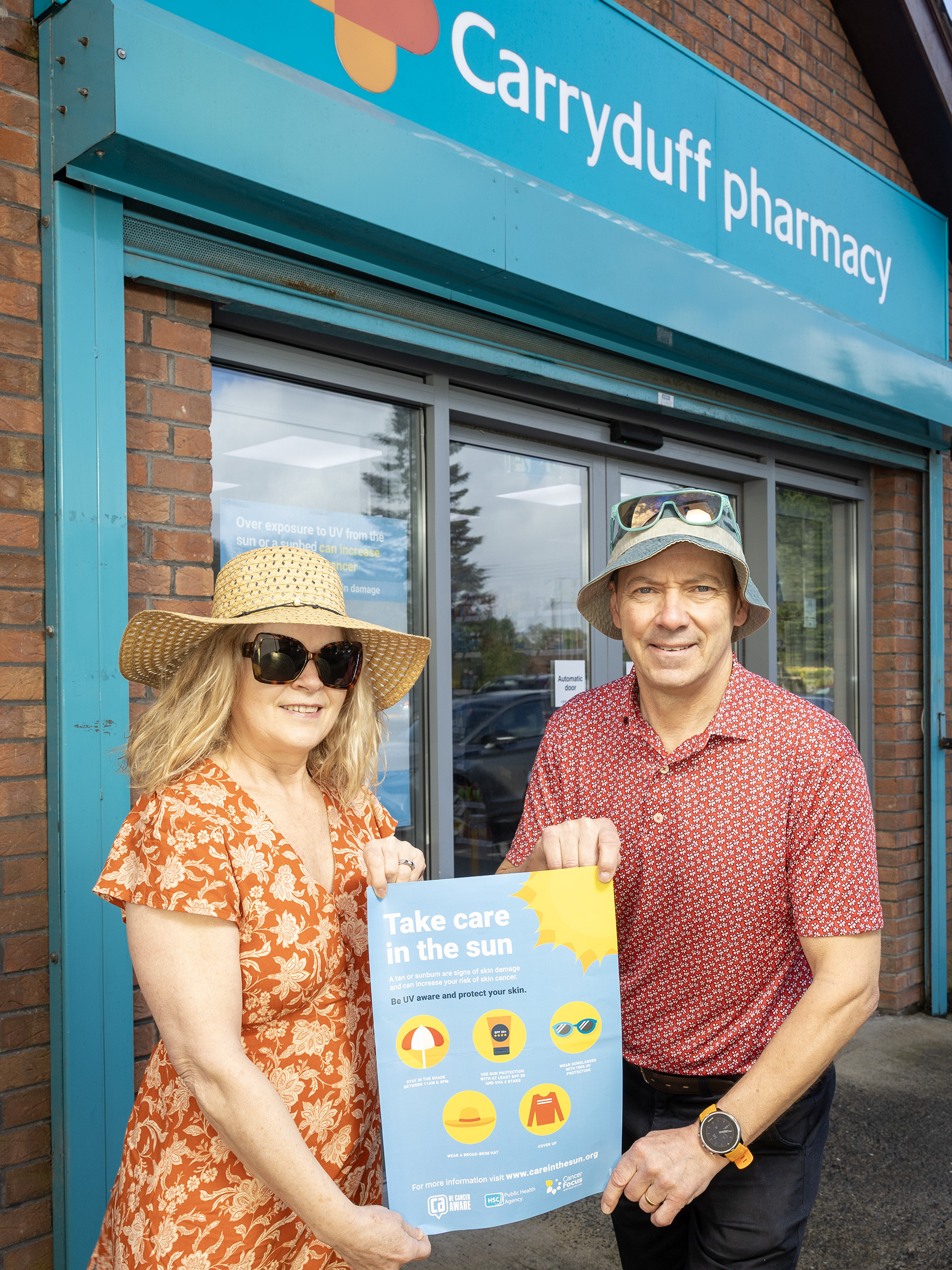
- Stay in the shade between 11.00am and 3.00pm, when UV rays are strongest.
- Cover up with suitable clothing.
- Wear a broad brimmed hat and sunglasses with 100% UV protection.
- Buy sunglasses that have a CE mark or carry British Standard BS EN ISO 12312-1.
- Use sunscreen on exposed skin; an SPF of at least 30 and UVA 4/5 stars as recommended by the Department of Health and National Institute for Health and Care Excellence.
- Babies under six months should stay out of direct sunlight. If exposure to sunlight is unavoidable, apply a small amount of high protection sunscreen to exposed areas, such as the cheeks and back of the hands. For children over six months choose SPF 30 or SPF 50 to protect against UVB rays and minimum UVA 4 stars. Higher SPF will give more protection.
- Avoid sunburn by never allowing your skin to go pink or red in the sun. Sunburn doesn’t have to be raw, peeling or blistering skin; for people with darker skin, it might feel tender, irritated or itchy.
- Choose and use the correct amount of sunscreen – an adult needs six teaspoons distributed evenly on the body with an SPF of at least 30 and UVA 4 or 5 stars.
- Avoid sunbeds – they can cause over exposure to UV radiation.
- Check your skin at least once a month, be aware of any changes, and speak to your GP if you notice any mole changes, new moles or abnormal skin changes.
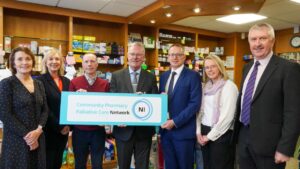
Garth Newberry, a Community Pharmacist in Carryduff, said: “Community pharmacists regularly help patients with a range of common health concerns associated with ‘Care in the sun’ such as skin protection, treatment for sun exposure and mole concerns. This campaign is an opportunity for you to chat to your local pharmacist or pharmacy team about how to look after your skin, how to stay safe in the sun, talk about medication that could increase your skin’s sensitivity to sunlight and also to raise any concerns, especially in relation to prevention and early detection of skin cancer.”
Naomi Thompson, Health Improvement Manager at Cancer Focus NI, said: “It’s important to remember the care in the sun messages both at home and abroad. Everyone is at risk of UV damage, but certain groups are particularly at risk including babies and children, those with fair hair and skin, outdoor workers and people with a family history of skin cancer. Just one episode of sunburn, especially in childhood, can double the lifetime risk of malignant melanoma, the most serious form of skin cancer.”
The Solar UV Index shows how much solar radiation is reaching us from the sun and how careful we need to be. UV levels vary with the seasons and time of day, but when the UV index is three or above we need to protect our skin and eyes, so it is important to know what the UV index is going to be throughout the day.
When choosing sunscreen, it is important to get one that offers protection against both UVA and UVB rays which can speed up skin ageing, cause sunburn and increase the risk of developing skin cancer. To reduce your exposure to UVB rays, your sunscreen should be at least SPF 30, and make sure it has a UVA rating of 4 or 5 stars.
How you apply your sunscreen also affects how well it protects you, but a lot of people do not apply enough sunscreen. To maximise protection against UV damage, at least six full teaspoonfuls of sunscreen lotion are needed for an all over body application for an average adult.
You should use:
- more than half a teaspoon of sunscreen to each arm;
- over half a teaspoon for the face and neck, including the ears;
- just over one teaspoon for the front of your body;
- just over one teaspoon for the back of your body;
- just over one teaspoon for each leg.
To give a good level of protection, sunscreen needs to be applied generously 30 minutes before you go outdoors, then reapplied every two hours, or more frequently after swimming, sweating, or towelling the skin.
Protecting skin from damage is really important but it’s equally important to check your skin for damage. You should check your skin at least once a month. Be aware of any changes, new moles or abnormal skin changes. Early detection and treatment of skin cancer can dramatically improve outcomes. Most cases of skin cancer are treatable, especially when caught early. Ask your pharmacist for advice if you are taking any medication that affects your skins sensitivity to sunlight such as doxycycline.
Where to get more information
You can find out what the daily UV index is for your area through the weather app on your smartphone or by downloading the Met Office app.
To find out more about taking care in the sun, visit www.careinthesun.org
If you are concerned about any aspect of cancer, you can call Cancer Focus NI’s Nurseline on 0800 783 3339 (Monday, Wednesday and Friday 9am–1pm) to talk about any cancer-related issue or to find out more about the charity’s cancer support services.