




Pharmacies Warn of Imminent Medicine Shortage
Painkiller supply issue highlights fundamental risk to NI medicines security
Community Pharmacy NI has warned of an imminent risk to the supply of essential medicines in Northern Ireland.
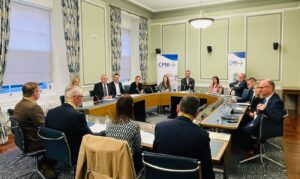
Briefing MLAs at an All-Party Group meeting at Stormont on Tuesday 3 February, representatives from CPNI advised of a growing shortage of many common medicines including the painkiller, co-codamol 30/500mg* which is likely to extend for several months.
In Northern Ireland, approximately 50,000 packs, equating to around 5 million tablets of co-codamol are dispensed each month to a population of fewer than two million people.
As things stand, community pharmacies may be forced to ration supplies of medicines related to shortages, potentially affecting on average 50 to 100 patients per pharmacy so that people have some supply and do not run out of vital medicines.
Community Pharmacy NI highlighted that this is not an isolated example with another shortage affecting specific low-dose, dissolvable aspirin used primarily as an anti-platelet medicine for patients at risk of stroke or heart attack.
When questioned by MLAs on the potential impact for Northern Ireland, Community Pharmacy NI confirmed that community pharmacies here are typically trying to source stock for over 100 common medicine lines in short supply.
While the current shortages are driven by global manufacturing and supply chain constraints, the organisation stressed that these issues represent significant medicines security and supply concerns in Northern Ireland with potentially direct implications for patient safety and consequential pressures for GPs, out-of-hours services and other parts of the health system.
Gerard Greene, Chief Executive of Community Pharmacy NI said,
“Today’s discussion made clear that community pharmacy in Northern Ireland is operating under sustained and increasing pressure. The gap between medicine costs and reimbursement is widening, and pharmacies here are also struggling to pay medicine wholesaler bills and receive sufficient supply of many common medicines to meet patient need.
“The supply issue sees community pharmacies working intensively to source medicines, often under severe constraints. We have pharmacy teams reporting back to us daily that they are seeing growing numbers of other commonly prescribed medicines also in short supply. All of this is taking place while pharmacy teams try to support patients who are understandably keen to get the medicines they need.
“We are appealing to the public to be patient with pharmacy teams as they try to source medicines, and we are appealing once again to the Minister to again prioritise support for the sector so that pharmacies can pay medicine wholesalers. This does not involve finding new funding for the sector, but rather to remove clawback which reduced the payments pharmacies received last year for medicines dispensed by £23m.
“The stability of the medicines supply chain, while it is a UK wide issue, is of particular concern to us locally because of Northern Ireland’s small market and additional logistical costs compared to GB.
“We have raised these concerns with the Health Minister and are calling on the Minister and the Northern Ireland Executive to work with the UK Government to strengthen medicines security and supply for Northern Ireland, including ensuring that medicine stock is appropriately ring-fenced, so patients continue to receive the medicines they rely on.
“If this is not addressed, there is a real risk that Northern Ireland will become a lower-priority market for medicine wholesalers, with serious implications for patient safety, continuity of care and the resilience of the wider health system.”
Community Pharmacy NI are advising strongly against patients self-selecting alternative medicines or altering doses without professional guidance, as this may be clinically inappropriate and, in some cases, harmful.
Community Pharmacies in Northern Ireland dispense millions of packs of commonly prescribed medicines each year and even relatively small interruptions in supply can have a rapid and disproportionate impact on patients, pharmacy teams and local health services.
Related Posts


Living Well summer campaign launched – discussing all things breastfeeding for mum and baby